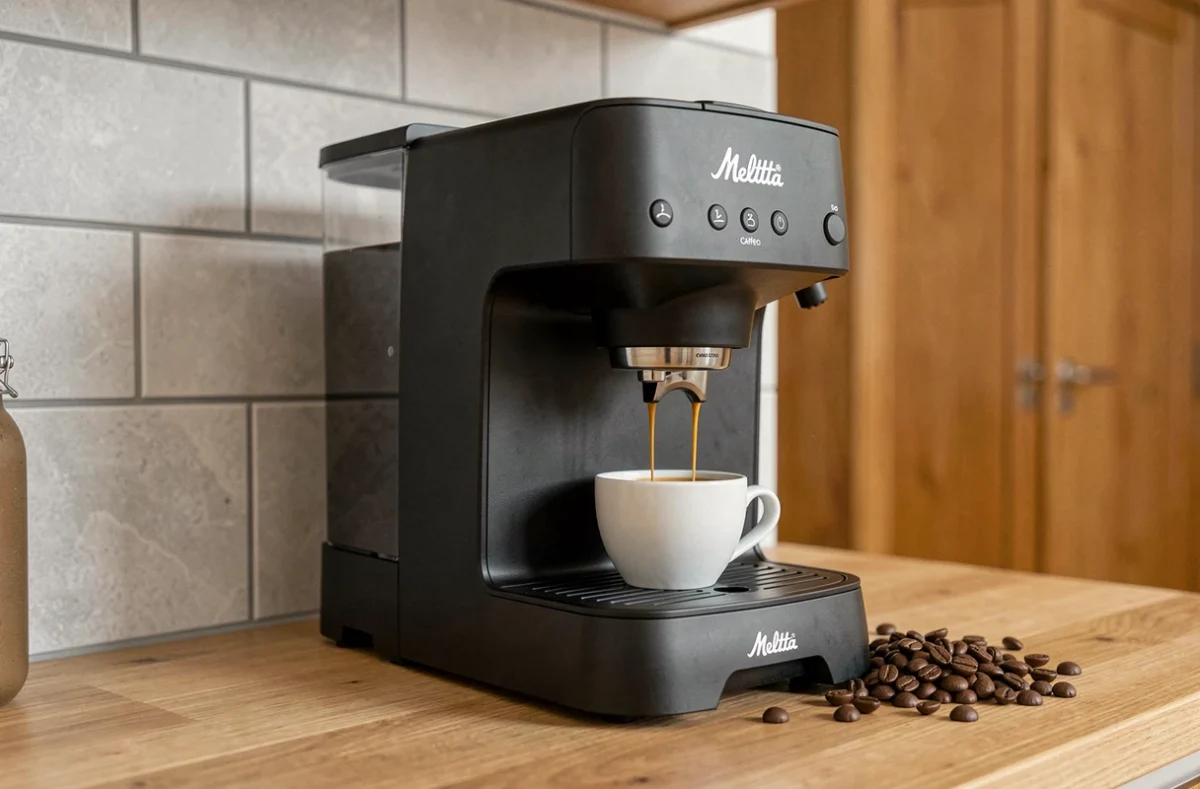
The Melitta Caffeo Solo E950-222 is an automatic coffee machine with an integrated grinder, designed for home use. It grinds the beans on demand and prepares an espresso or a long coffee in a single operation, without capsules or pods. Its compactness makes it one of the narrowest models in its category, but its operation relies on a few preliminary settings that directly affect the quality in the cup.
Water circuit and drainage valve: the sensitive points to know beforehand
Most of the reported malfunctions on the Caffeo Solo E950-222 do not come from the grinder or the electronics, but from the water circuit and the drainage valve. Specialized workshops report recurring symptoms: a persistent “fill the system” message, water flowing directly into the drip tray instead of passing through the brewing group, or errors related to the drive of the group.
A water circuit indicator that remains lit after filling the tank often signals the presence of air in the pipes, not a faulty pump. The procedure involves filling the tank and then starting the drainage function via the coffee power button. If the problem persists, the filter should be checked, the brewing group cleaned, and a complete descaling considered.
Understanding this mechanism prevents sending the machine back to customer service for a simple air bubble. The Melitta Caffeo Solo E950-222 user manual details each step of the purging and initial setup process, including the precise order in which to fill and position the tank.
Grinder adjustment and coffee preparation on the Caffeo Solo
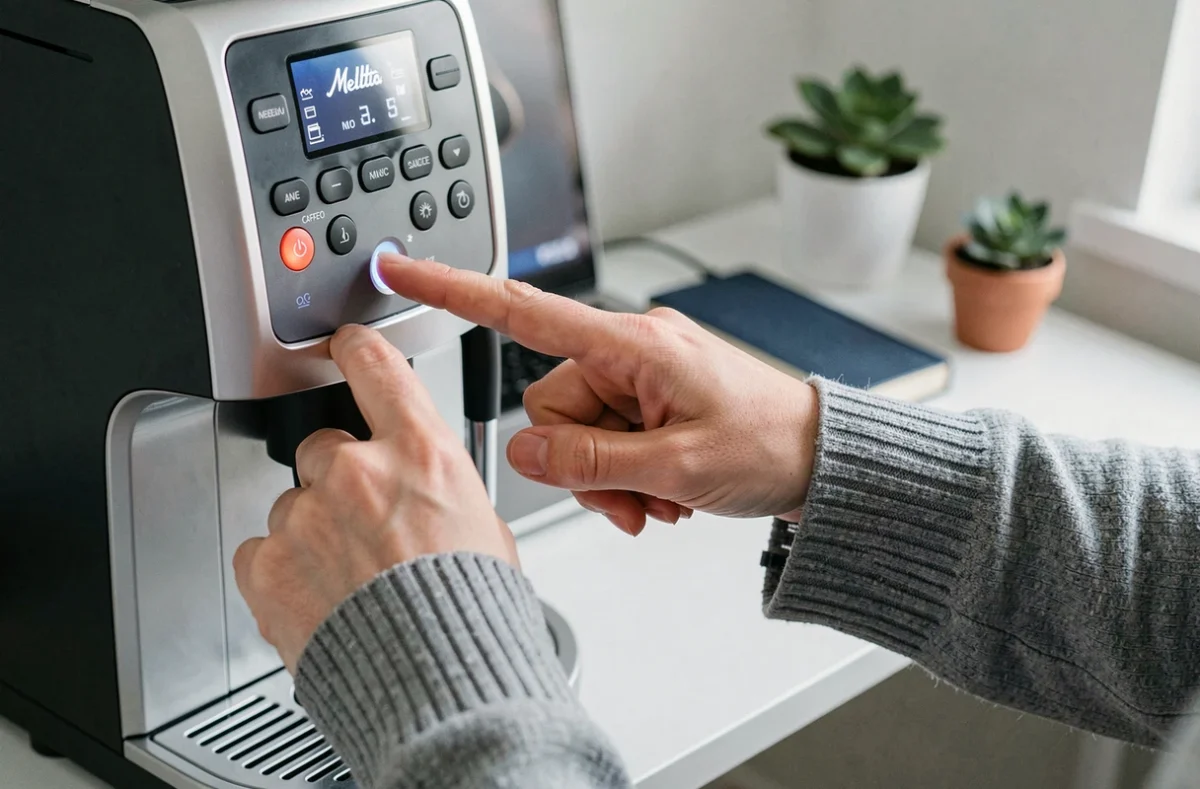
The grinder of the Caffeo Solo offers several grind levels, accessible via a dial located inside the bean compartment. The setting should only be changed while the grinder is operating, that is, when the machine is grinding. Turning the dial while stopped risks damaging the grinding burrs.
A finer grind produces a stronger coffee and a slower flow. A coarser grind speeds up extraction and results in a lighter brew. The adjustment is done in increments, testing a cup between each modification.
The amount of water per cup is adjusted directly on the machine by holding down the preparation button until the desired volume is reached. The Caffeo Solo then memorizes this setting for subsequent preparations. Two distinct buttons allow you to choose between normal intensity and enhanced intensity.
Choosing coffee beans
The quality of the bean is as important as the machine’s settings. Beans that are too oily (very dark Italian roast) can clog the grinder more quickly. A medium to slightly dark roast bean offers a good compromise between flavor and maintenance on this model.
Descaling and maintenance of the Melitta E950-222 machine
Descaling is the most crucial maintenance action for the longevity of the machine. The Caffeo Solo includes an Anti Calc program that guides the user step by step via indicator lights. When the machine signals the need for descaling, the operation should not be postponed: scale damages the pump and boiler irreversibly.
A commonly misunderstood point concerns the Pro Aqua water filter, compatible with this model. Installing a filter in the tank reduces the frequency of descaling alerts, but the water filter does not eliminate the need for descaling. When the machine requests it, the program must be executed. The filter should also be removed from the tank during the entire Anti Calc cycle.
- Clean the brewing group weekly by rinsing it with clear water (it can be removed without tools through the side hatch).
- Empty the grounds container and drip tray daily to prevent mold and bad odors.
- Run a rinse cycle each time you turn it back on after a prolonged period of inactivity.
Spare parts and repair of the Caffeo Solo
Unlike some automatic machines whose internal components are monobloc, the Caffeo Solo E950-222 benefits from separate availability of wear parts. Brewing group, seals, pump, drainage valve, pipes, grinder components, and trays can be ordered individually.
This modularity often makes repair viable without replacing the entire machine. Compatibility must, however, be verified based on the exact reference E950-222, and in some cases from the internal identification plate, as parts differ according to production series.
- The brewing group is the part that wears out the most: its seals become rigid over time and cause internal leaks.
- The pump may lose pressure after several years of intensive use, resulting in coffee that flows too slowly or an abnormally loud noise.
- Defective drainage valves explain the majority of cases where water ends up in the drip tray instead of passing through the ground coffee.
Water hardness and filter adjustment on the Melitta Caffeo Solo
The machine asks for the local water hardness to be entered upon initial setup. This parameter determines the frequency of descaling alerts. An incorrect value skews the entire maintenance schedule: too low, the machine will not signal descaling in time; too high, it will request it unnecessarily often.
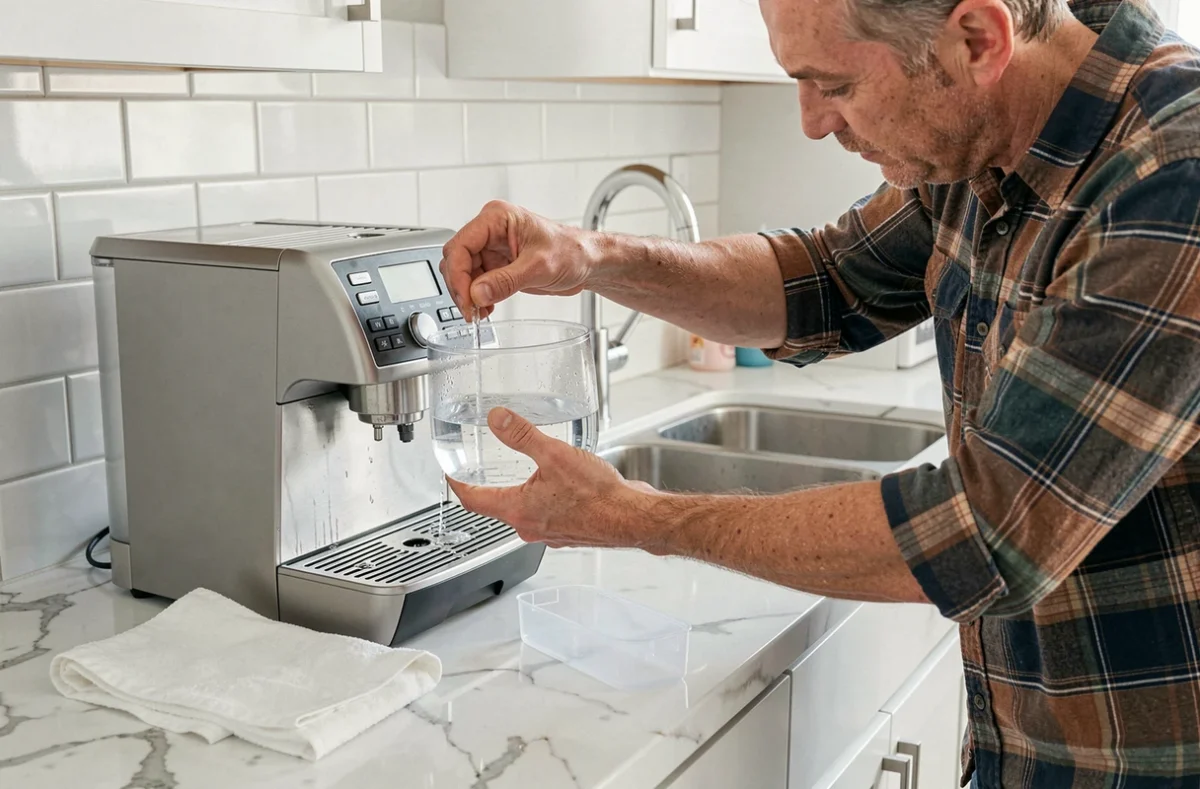
Water hardness can be checked with a test strip (sometimes provided with the machine) or by consulting the local water company’s data. Setting this parameter at the first use protects the internal circuit in the long term.
The Caffeo Solo E950-222 remains a reliable machine as long as its maintenance cycles are respected. Its water circuit, sensitive to scale and air, is the main point of vigilance, much more so than the grinder or the electronics. Regular descaling and a clean brewing group are sufficient to maintain consistent extraction for several years.