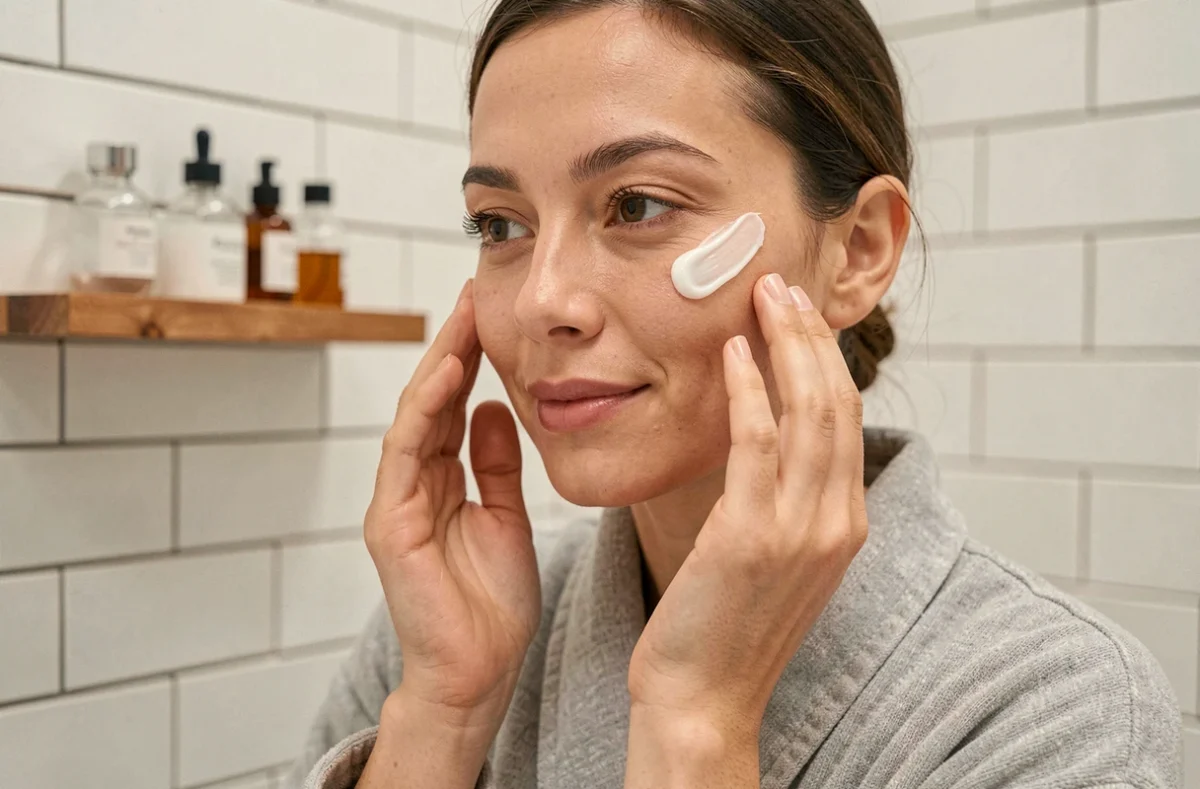
Your skin feels tight after a shower, shines at noon, or reacts to the slightest change in season. Taking care of your skin daily doesn’t necessarily require a long or expensive routine. The challenge is not the number of products, but choosing the right actions suited to your face and body.
Why using too many products damages the skin barrier
Have you noticed that your skin reacts more when you change several products at once? It’s not a coincidence. The skin barrier, this lipid layer that protects the epidermis, becomes weakened when exposed to too many active ingredients at the same time.
Combining a scrub with grains, an exfoliating acid, and a retinoid on the same night increases the risk of irritation. Exfoliation should not be a daily routine. Tingling, redness, peeling: these signals indicate that the routine is too aggressive, not that the skin needs an additional product.
Recent recommendations converge towards a simple rule: introduce only one new product at a time and observe the reaction for several days. If the skin remains comfortable, you can consider an addition. In case of a reaction, it’s better to reduce rather than layer. You can also learn more about Beauté en Folie to delve deeper into this progressive care logic.
In practice, a gentle cleanser, a moisturizer, and sun protection cover most needs. The rest is adjustment, not a foundation.

Facial care routine: three steps that are enough morning and night
Cleansing the face remains the fundamental step. In the morning, it removes the sebum accumulated overnight. In the evening, it eliminates residues of pollution, makeup, and sunscreen. A cleanser suitable for your skin type (gel for oily skin, milk or oil for dry skin) does the job without stripping.
Moisturizing comes next, on slightly damp skin. This detail changes everything: the water present on the surface helps the cream penetrate and enhances its barrier effect. Choose a lightweight cream in the morning, richer in the evening if your skin feels tight.
The third step, often neglected: sun protection. Retinoids and certain acids increase sensitivity to the sun. Applying sunscreen in the morning protects the skin from UV damage, regardless of the season. Photoprotection is the most effective and least expensive anti-aging care.
Adapting the routine according to the season
In winter, dry air and heating dry out the skin. A thicker cream or a few drops of vegetable oil compensate for this loss of hydration. In summer, lighten the texture and strengthen sun protection. The steps remain the same, with adjusted products.
Retinol and concentrated actives: what your skin can (or cannot) tolerate
Retinol has become a popular active ingredient in skincare routines. It stimulates cell renewal and improves skin texture. It also requires precautions that packaging rarely mentions clearly.
- Use exclusively in the evening, as retinol increases sun sensitivity. A sunscreen the next morning is then necessary.
- Its use is not recommended during pregnancy, according to guidelines from the American Academy of Dermatology.
- Teenagers and children should not use retinol, concentrated vitamin C, or exfoliating acids without medical advice. These actives are formulated for adult skin.
If you’re just starting, begin with a low concentration, two evenings a week. Gradually increase. A well-tolerated active yields better results than a powerful one that is poorly tolerated.
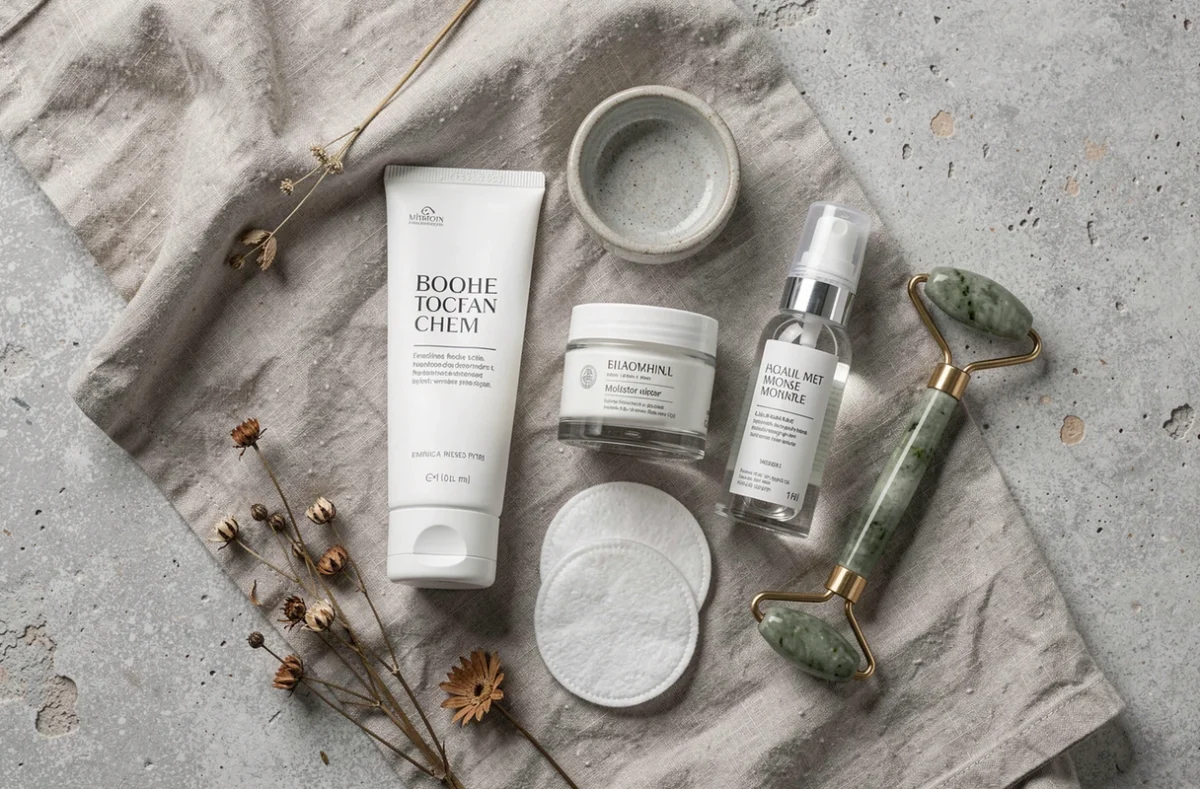
Sleep, water, and diet: the invisible care for the skin
No cream can compensate for chronic sleep deprivation. At night, the skin accelerates its cell renewal. Insufficient rest shows quickly: dull complexion, pronounced dark circles, skin that heals less well.
Internal hydration plays a comparable role. Drinking enough water throughout the day maintains skin elasticity. It’s not spectacular, but it’s a foundation that topical treatments cannot replace.
On the nutrition side, vegetables rich in antioxidants and fatty acids found in fatty fish or vegetable oils contribute to skin quality. Conversely, an excess of simple sugars, alcohol, or ultra-processed foods can dull the complexion and promote imperfections.
The shower, a false friend for body skin
A shower that is too hot or too long dissolves the protective lipids of the body skin. Reducing the temperature and duration of the shower preserves natural hydration. Applying a cream or balm on still damp skin right after the shower seals in hydration. This step takes just a few seconds and makes a real difference, especially in winter.
- Prefer a shower gel without harsh sulfates, with a pH close to that of the skin.
- Dry yourself by patting rather than rubbing.
- Target the driest areas (legs, elbows, hands) with a richer balm.
Taking care of your skin daily ultimately comes down to a few regular steps, not a collection of products. A short routine, tailored to your skin type and maintained over time yields better results than a complex protocol abandoned after two weeks. Start with the minimum, observe, then adjust: this is the only method that works in the long run.