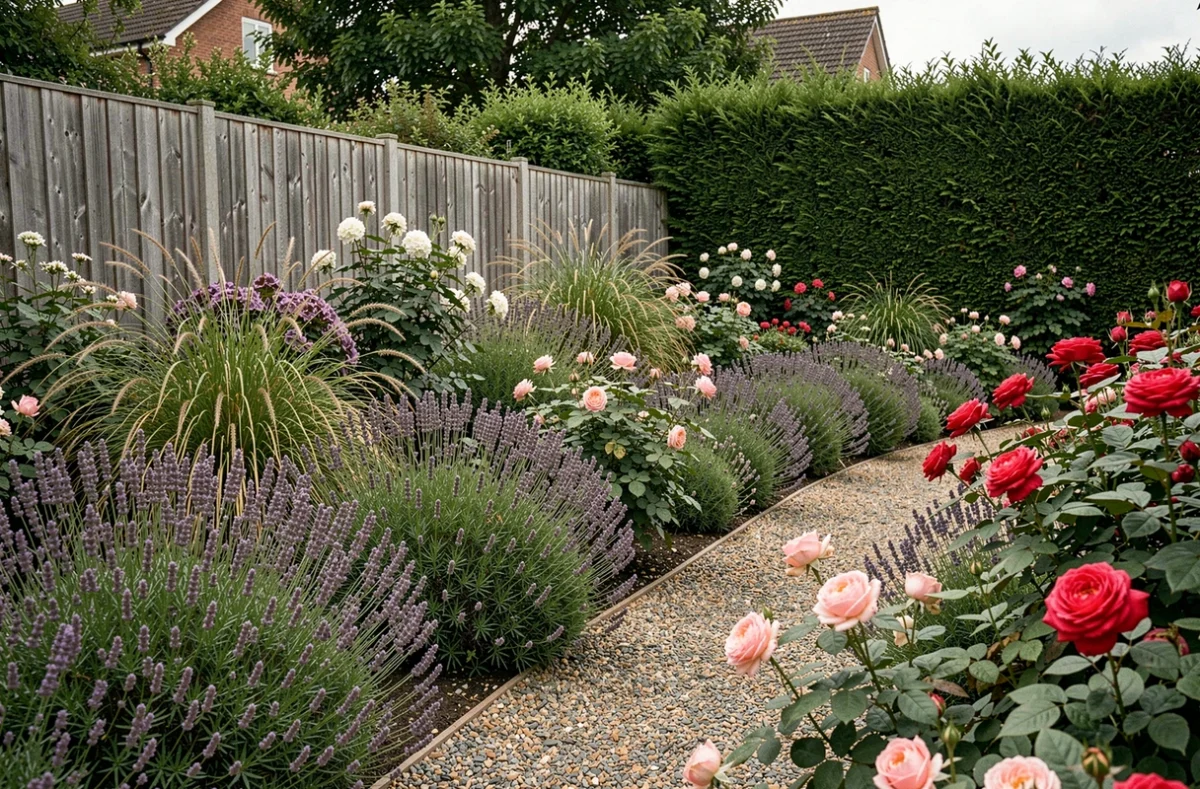
A garden that retains colors from January to December does not rely on a collection of randomly purchased plants. It is built around a simple principle: to stagger the blooms, season after season, so that at least one species is in flower at all times. This principle of staggered flowering requires a bit of method, but it is accessible even with a small plot of land.
Staggered flowering: planning a flowering garden with layers of plants
You may have noticed that a spectacular flowerbed in June can look empty in November? The problem rarely comes from the soil or exposure. It stems from the lack of overlap between the plants.
To avoid these gaps, the most effective approach is to think in layers. Each layer, from ground cover to shrubs, hosts species whose flowering periods complement each other. A concrete example: at the foot of a lilac (spring bloom), plant perennial geraniums (summer) and asters (autumn). Three layers, three seasons covered without any gaps.
Resources like lesprit-jardin.fr allow you to delve deeper into these plant associations and find ideas suited to each region.
Winter remains the most delicate season. A few winter-flowering shrubs change everything: mahonia offers yellow clusters as early as December, while hellebore (or Christmas rose) blooms from January to March. Evergreen shrubs structure the garden when perennials are dormant.
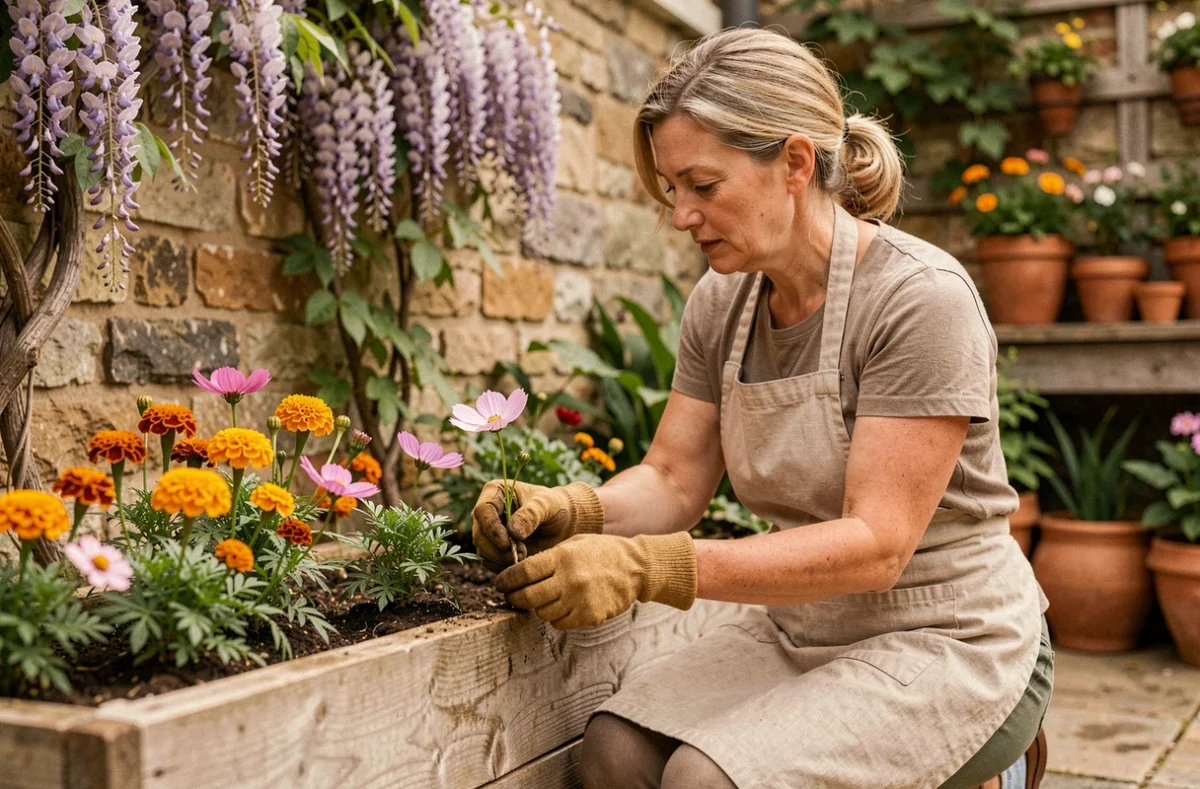
Soil and plant origin: two criteria that determine success
Most guides talk about choosing colors or heights. Before getting there, two questions deserve your attention.
Know the nature of the soil before planting
Clay soil retains water and is suitable for roses, hydrangeas, and heucheras. Sandy soil drains quickly and favors lavenders, sages, and ornamental grasses. Planting without considering this reality condemns certain species from the first summer.
A simple test: take a handful of moist soil and squeeze it. If it forms a compact ball, your soil is rather clayey. If it crumbles, it is sandy or loamy. This gesture of a few seconds guides all your subsequent choices.
Favor plants adapted to the local climate
The “Local Plant” label identifies plants whose origin corresponds to a specific biogeographical region. Regionally sourced plants require less watering and maintenance once established, because they are genetically adapted to the conditions of the soil.
This origin criterion is rarely highlighted in traditional garden centers, but it makes a real difference over time. A garden composed of local species withstands drought episodes better and attracts more pollinators.
Watering restrictions and resilient gardens: anticipating drought
Prefectural watering restrictions multiply every summer. They vary from one municipality to another, and the VigiEau service allows you to check the rules in effect in your area. Designing a flowering garden without integrating water constraints has become a risky bet.
A so-called “dry” garden is not self-sufficient right from planting. Even drought-resistant plants need generous watering in the first year to develop their roots deeply. After this establishment phase, water inputs are significantly reduced.
Here are some concrete levers to limit watering:
- Organic mulching (wood chips, straw, dead leaves) retains soil moisture and limits evaporation while nourishing the soil as it decomposes
- Perennials with gray or silver foliage (stachys, artemisia, santolina) visually signal their adaptation to dry soils and require little water once established
- Grouping plants by water needs prevents overwatering drought-tolerant species to satisfy their thirsty neighbors
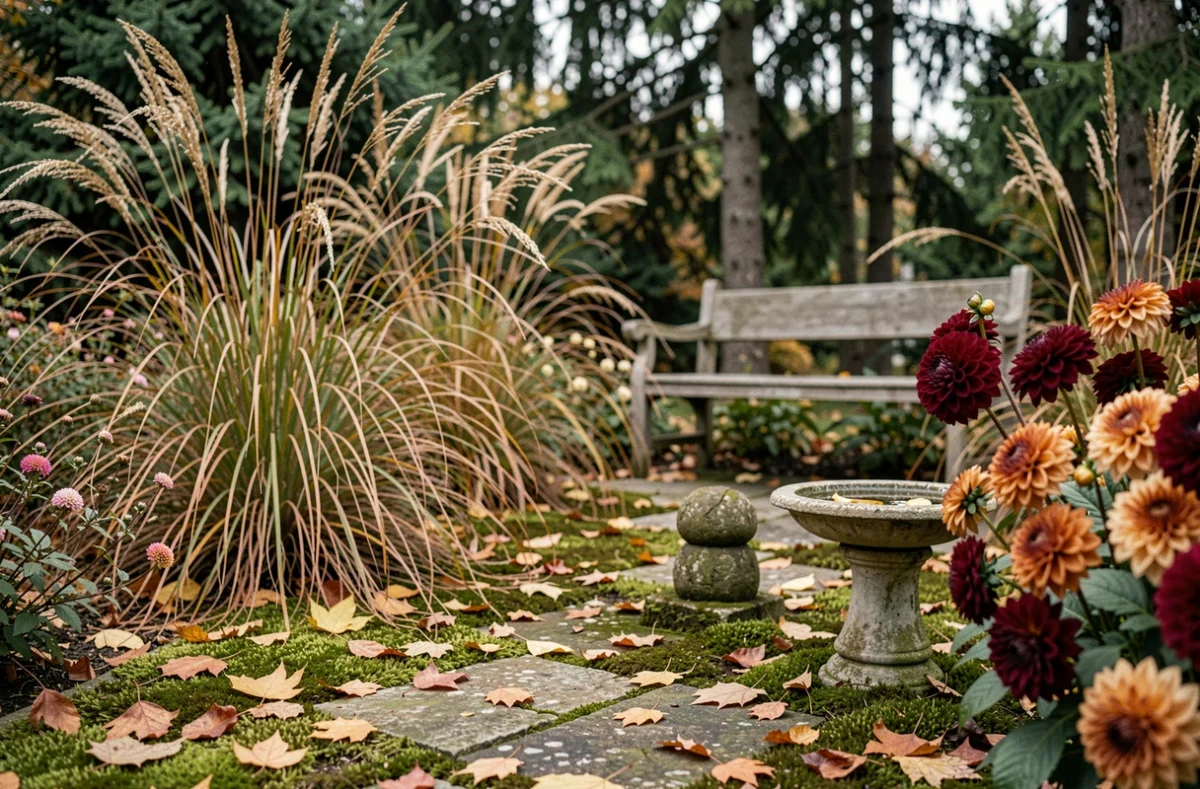
Autumn maintenance and biodiversity: what is best not to cut
The classic reflex is to cut everything back in autumn to “clean” the garden. However, this action deprives the garden of part of its winter interest and harms wildlife.
Keeping hollow stems and dry inflorescences provides shelter for overwintering insects. Ladybugs, solitary bees, and certain beetles take refuge there during the cold months. By cutting everything, we eliminate these micro-habitats.
The right approach: remove diseased or fungus-infested parts, but leave the healthy stems of perennials in place until the end of winter. Ornamental grasses, for example, remain decorative under frost and protect their own crown from freezing.
This maintenance choice also alters the visual aspect of the garden. The dry silhouettes of sedums, echinaceas, or achilleas create textures that “cleaned” beds cannot offer. A garden in bloom all year round also includes the beauty of dry structures in winter.
Creating colorful flowerbeds: combining colors without a false note
The harmony of colors in a flowerbed is based on a principle that landscapers have long used: neighboring shades on the color wheel (pink, mauve, blue) create a soft ambiance, while opposite colors (yellow and purple, orange and blue) produce a vibrant contrast.
For an easy-to-achieve flowerbed, limit yourself to two or three dominant colors and add green or silver foliage as a visual binder. Too many different colors in the same flowerbed gives an impression of disorder.
Roses, often considered demanding, integrate well into a mixed flowerbed when accompanied by low perennials (nepeta, perennial geraniums) that dress their bare base. This association works from spring to autumn and requires reasonable maintenance.
A harmonious and flowering garden all year round is built through successive layers of decisions: the soil first, the origin of the plants next, then the overlap of blooms and water management. Each of these steps is as important as the final choice of colors.