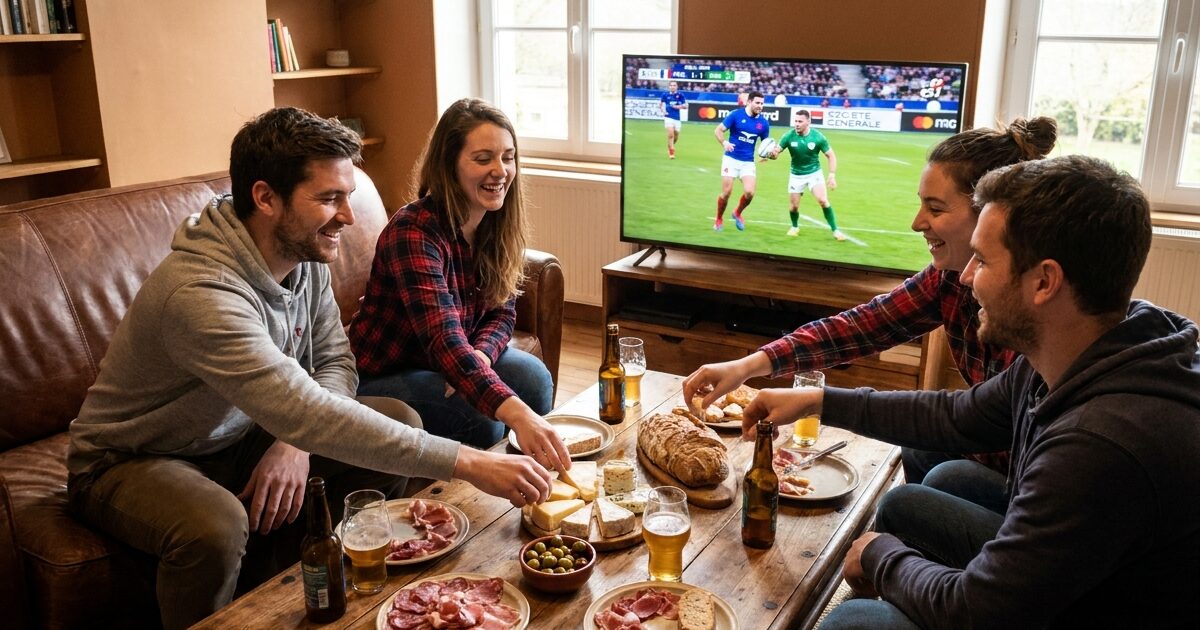
A rugby match is not watched like a movie that you start when everyone is settled in. The kickoff time dictates the entire evening, from the first toast to the last cheese. Organizing a rugby night with friends requires scheduling each segment (appetizers, meal, halftime, third half) to a precise timing, or you risk missing the tournament try while fetching the bread.
Time Zone Differences and TV Schedule: The Trap That Ruins Match Timing
Competitors discuss recipes and decoration. No one focuses on the technical problem that derails half of the rugby nights: the actual kickoff time changes depending on the day and the competition. In the same week of Top 14 and Pro D2, matches can be scheduled from 2:30 PM to 9 PM. A match of the Bleues in New Zealand takes place early in the morning in France.
The broadcast schedule adds a layer of uncertainty. The planned channels can change up to the day before the match. Checking the channel and time the day before prevents discovering at the last minute that the stream has switched from a free channel to a subscription, or that the kickoff has been pushed back by half an hour.
For the 2027 Six Nations Tournament, the discrepancies are telling: France-Wales is announced at 5:40 PM, while Ireland-France, in closing, is scheduled for 9:10 PM Paris time. These two time slots call for radically different evening formats. A light dinner is sufficient in the first case, while the second requires a proper meal before or after the match.
We recommend setting the arrival time for guests at least 45 minutes before kickoff, regardless of the time slot. This buffer accommodates latecomers, allows time to serve the first drink, and to set up the broadcast. Those interested in the actual duration of a match (extra time, stoppages, TMO protocols) can check the page Canterbury crampon to refine their planning.
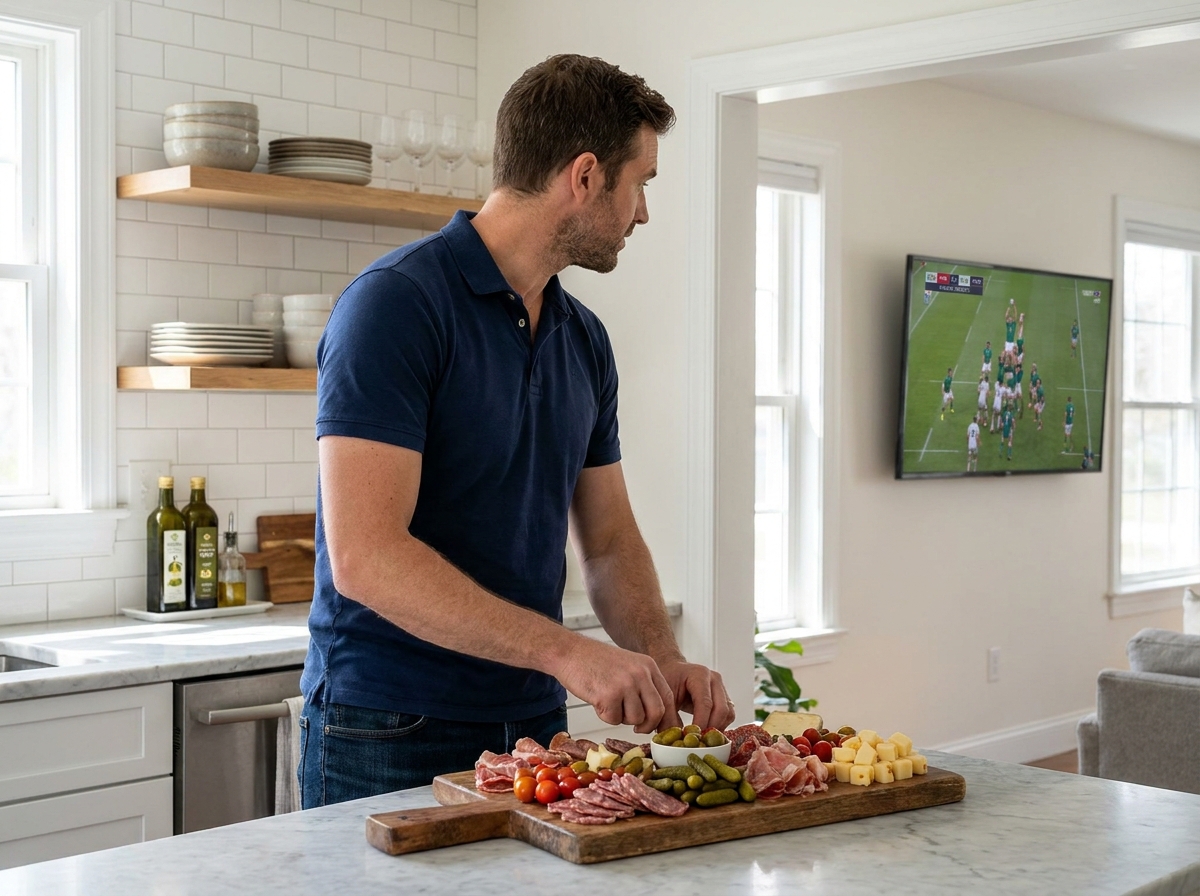
Sequencing the Rugby Appetizers According to Kickoff Time
A match at 3 PM and a match at 9 PM do not create the same appetite or group dynamic. Using the same menu for both is like serving foie gras at 2:30 PM or chips at 8 PM.
Match Early Afternoon
Kickoff between 2 PM and 3:30 PM: guests arrive after lunch. The appetizers remain light, focused on cold bites that are easy to grab with one hand. Halftime serves as a coffee or quick dessert break. The real meal comes after the final whistle, in the third half.
Match Late Afternoon
The 5 PM-6 PM slot is the trickiest. Guests have not yet had dinner but have passed snack time. A dinner-style appetizer is necessary: substantial savory bites served upon arrival, followed by a hot dish or a hearty buffet at halftime. Plan for enough to sustain the second half without returning to the kitchen.
Evening Match
Kickoff after 8:30 PM: the meal is taken before the match. The appetizers start around 7 PM, followed by a main course completed before kickoff. Halftime is limited to cheese, sweets, or a last drink. This format leaves the second half completely free of culinary distractions.
Match Buffet: Quantities and Logistics to Not Miss Anything
The constraint of a rugby night is not gastronomic; it is logistical. Guests eat standing or slumped on a couch, eyes on the screen. Anything that requires a plate, a knife, or both hands is a problem.
Here are the criteria for a buffet that lasts without tying up a full-time cook:
- Individual pieces that can be eaten in two bites maximum (mini-quiches, cold skewers, rillettes on toast, vegetable sticks with dip). Nothing that spills, nothing that crumbles on the couch.
- A single hot dish, prepared in advance and kept warm in the oven or casserole (chili, pulled pork, curry). Serving should be done quickly at halftime, in under five minutes.
- Bread and cheese at the end of the match: this is the safety net for big appetites and the signal that the third half is starting.
- An autonomous drinks station (cooler, corkscrew, bottle opener, glasses) so that no one disturbs the group during a decisive play.
Halftime Management: The Ten Minutes That Matter
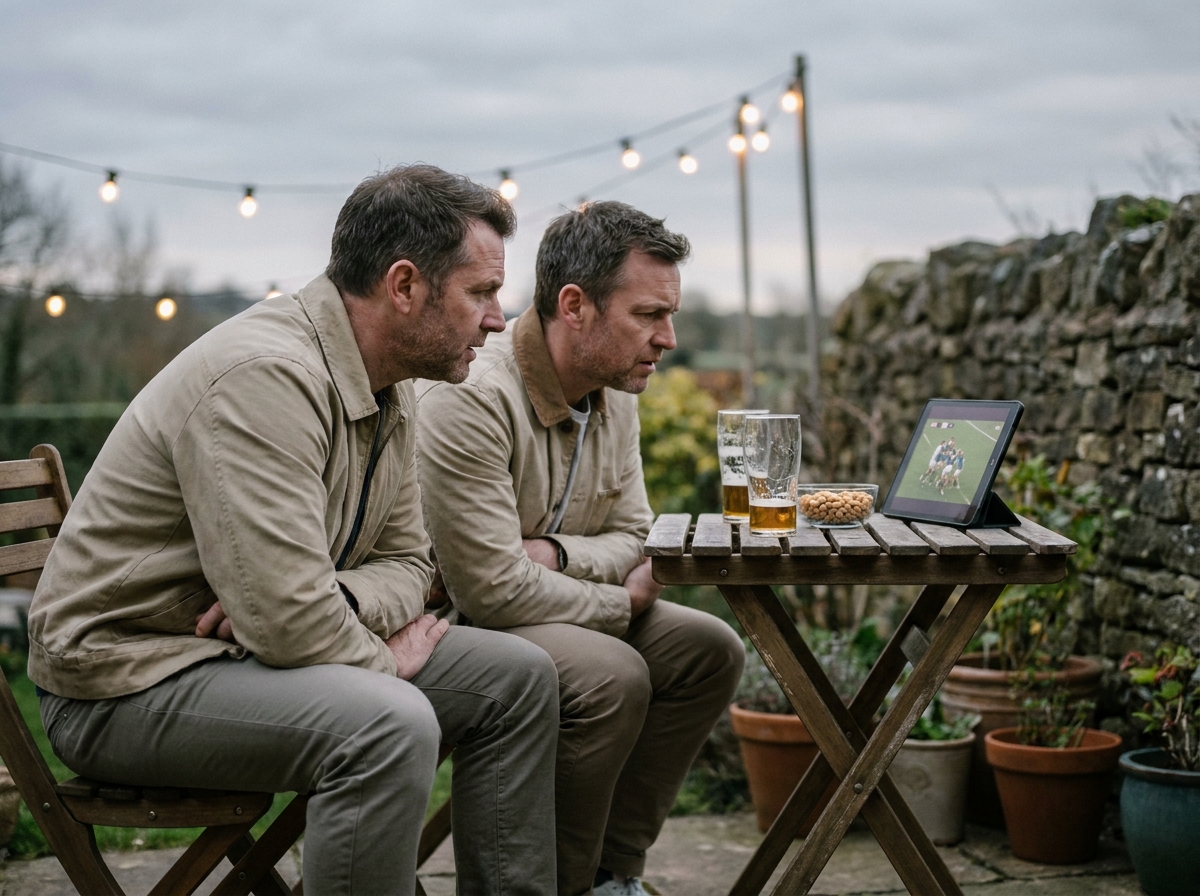
The halftime of a rugby match lasts about ten minutes. It is the only moment when collective attention relaxes. Everything that requires time in the kitchen must be ready to come out at that moment.
Halftime is the logistical pivot of the evening, not a trivial interlude. A hot dish taken out of the oven, a fresh charcuterie board, or a quick dessert can reignite the group’s energy for the second half. Tasks to be performed during halftime are limited to three actions: take out, serve, clear the bare minimum.
If the match is close, halftime will be short in real attention: guests comment, check statistics, and reignite tactical discussions. Better to have express service than an elaborate setup that no one will watch.
Adapting the Evening to the International Calendar and Time Zone Differences
The 2027 World Cup will be held in Australia. The time difference will require matches in the French morning, or even very early in the morning depending on the host cities. Daylight saving time also starts in several Australian states during the tournament, but not in all: it will be necessary to check the French time for each match individually rather than relying on a general conversion.
This type of morning slot transforms the format: rugby brunch with scrambled eggs, pastries, and coffee replaces beer and sausage. The principle remains the same (everything ready before kickoff, quick service at halftime), but the menu and atmosphere change completely.
For Six Nations matches played abroad (Twickenham, Dublin, Rome), the time difference is negligible, but local times vary. The Ireland-France match in 2027, scheduled for 9:10 PM, for example, requires planning for a proper dinner beforehand.
The best reflex remains to check the detailed TV schedule the week of the match, set the arrival time based on the confirmed kickoff, and adapt the buffet format to the time slot. A successful rugby night with friends does not rely on the quality of the recipes, but on the synchronization between the match and each segment of the evening.