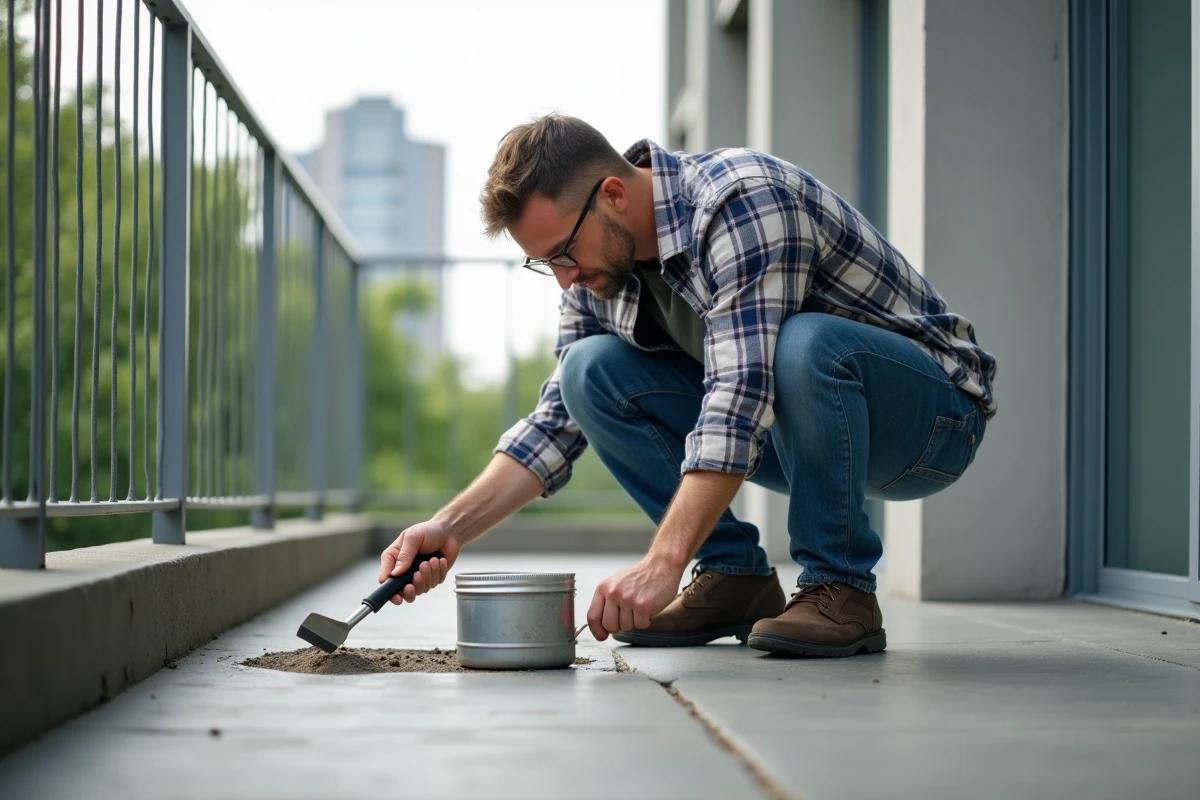
A concrete slab can give way unexpectedly, even if everything has been done according to the rules of the trade, from reinforcement to implementation. Due to temperature variations or the insidious effects of water, the material weakens, sooner or later.
Why do cracks appear on a concrete balcony and what risks do they pose to the structure?
When the first cracks seem to appear, it is tempting to attribute everything to a construction error or the passage of time. But the reality is often more complex. Even concrete, tamed and poured with care, is not immune to everyday aggressions: thermal shocks, frost, occasional overloads, or simple waterproofing defects. Each neglected step corresponds to a risk of disorder later on.
As soon as the first gap appears, water seeps in and troubles accumulate. Humidity penetrates the concrete, rust attacks the reinforcement, and the structure deforms from the inside. What may seem like a benign imperfection can sometimes turn into deep fragility. Corrosion weakens the rebar, spalling spreads, and overall safety is no longer guaranteed.
Repairing a cracked balcony is not just a matter of camouflage. It involves understanding the root of the problem, studying each crack, and mapping them out. This meticulous analysis allows for precise actions to be taken where they are truly necessary. Identifying, diagnosing, and choosing the right method: this is the roadmap to ensure the longevity of the structure.
Restoring a cracked balcony requires rigor and method. Careful work ensures a reliable slab and a preserved building.
Preventing cracks: the right actions to sustainably protect your balcony
Maintaining the integrity of your balcony requires constant attention. Cleaning two to three times a year, followed by rinsing with clear water, is enough to prevent moisture accumulation. Moss or greenish stains should be removed to prevent water stagnation. A simple visual inspection can already help anticipate the first signs of weakness.
Effective solutions can strengthen the resistance of exposed balconies. Treatment with a water-repellent product protects the surface against infiltration, while suitable sealants at joints ensure their waterproofing. Over time, monitor each peripheral joint and promptly replace damaged seals: this action prolongs the lifespan of the support.
Here is a clear reminder of preventive actions that make a difference over time:
- Inspect the slab after each risk period, especially after winter.
- Prefer gentle, suitable cleaners to preserve the concrete and avoid damaging the material.
- Ensure that the products used are perfectly compatible with each other during maintenance interventions.
Do not underestimate the importance of these regular checks. Opting for a waterproof coating or a good drainage system can prove wise. By focusing on the quality of materials and the seriousness of interventions, the balcony gains robustness and withstands the seasons without faltering. For those who wish to delve deeper into each step, the file successfully renovating a concrete balcony provides detailed advice on methods tested in the field.
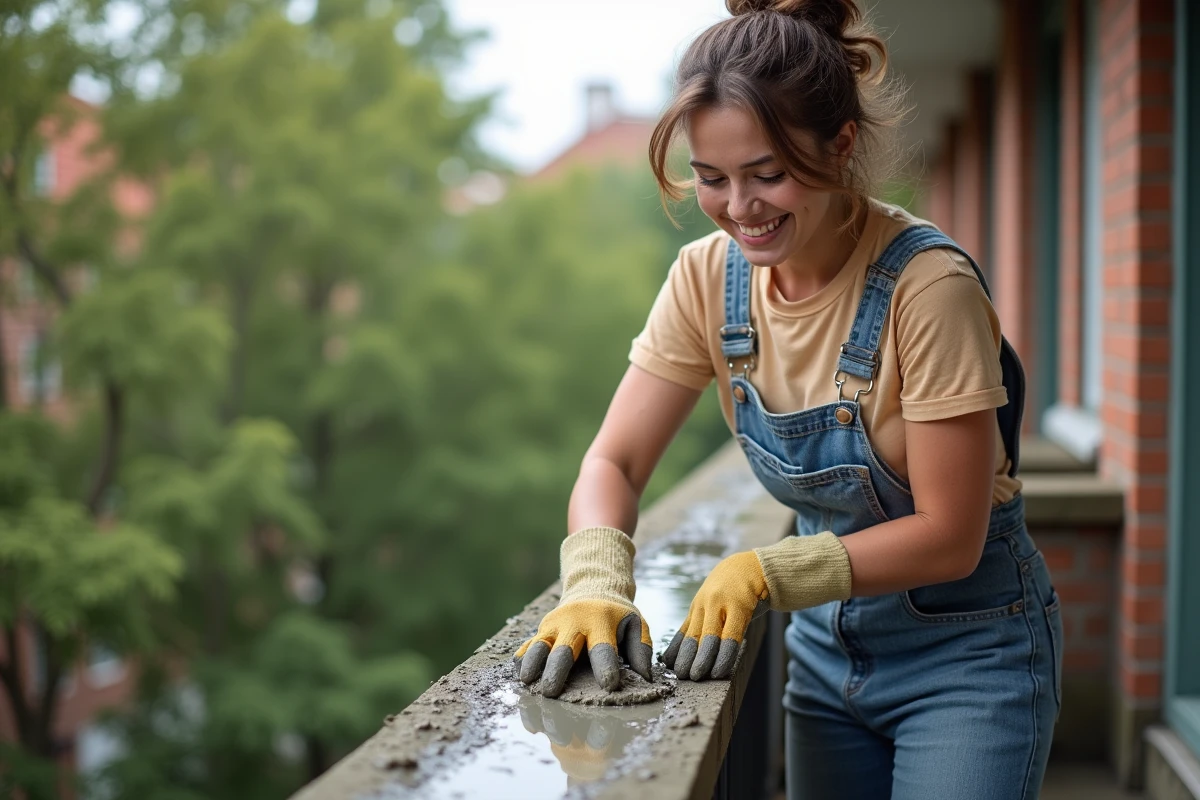
Repairing a cracked balcony: the simple guide for an effective step-by-step renovation
Prepare the surface before any intervention
The repair always begins with meticulous preparation: sanding the area, removing any dirt or old product, dusting, degreasing. It is impossible to carry out reliable work on a poorly cleaned support. The inspection of the cracks must also be precise: depending on the width and depth, the approach differs. A simple hairline crack on the surface will not have the same impact as a through crack.
Choose the appropriate repair method
The choice of mortar or product to apply is not made lightly. One should choose a formula that is expressly compatible with the existing concrete and suitable for the thickness to be treated. Technical data sheets prescribe the correct method, drying times, and essential precautions. Follow them to the letter to ensure the durability of the work.
Here are the steps to follow to sustainably restore a cracked concrete balcony:
- Widen the crack using a chisel or grinder to remove any friable areas and allow the mortar to adhere securely.
- Thoroughly clean the exposed area to eliminate any dust or impurities.
- Apply the repair product according to the indicated thickness and smooth it carefully for a uniform result.
The drying phase should not be improvised: let the slab rest for at least 24 to 48 hours, depending on the manufacturer’s specifications and ambient conditions. If the crack reveals a structural weakness, it will be necessary to reinforce it with suitable metal reinforcements before closing it up. To last, the renovation concludes with the installation of a high-performance waterproofing layer, ensuring a return to perfect solidity. Thus, the balcony regains its proud appearance and is no longer afraid of harsh winters, persistent rain, or unexpected disorder.