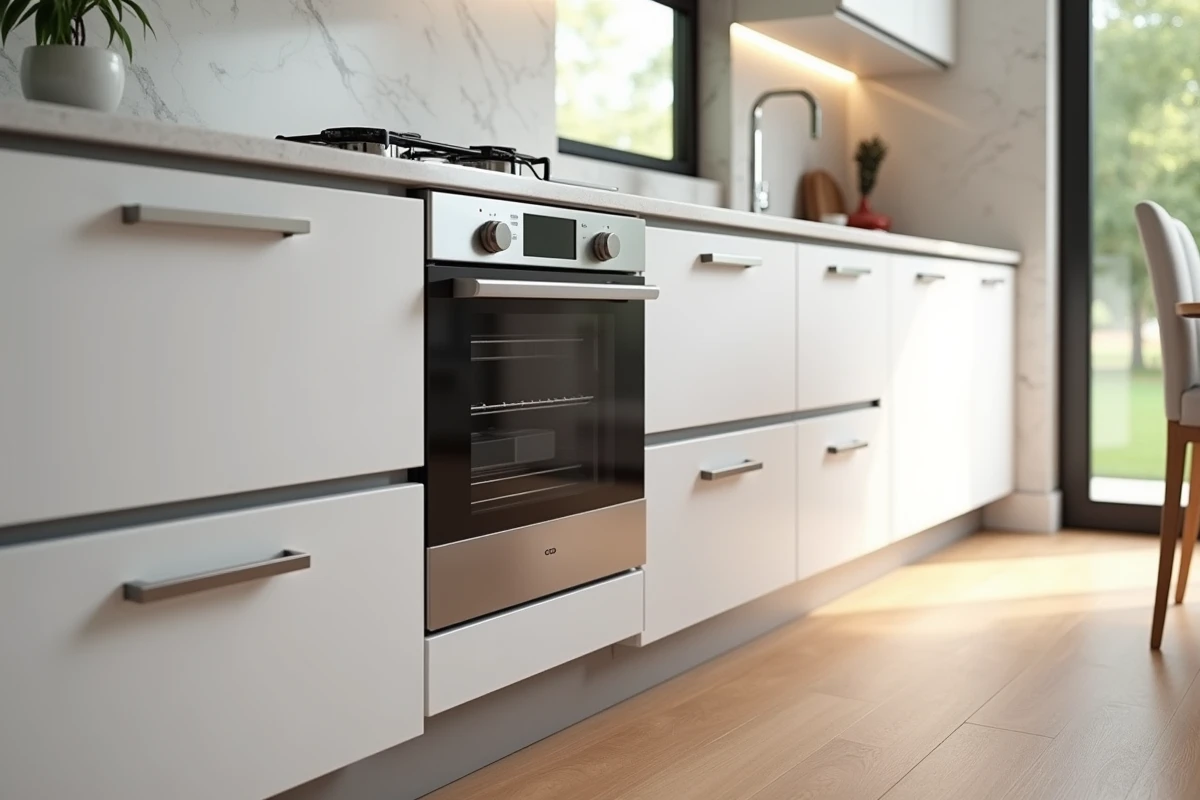
Placing a dishwasher next to an oven seems logical when space is tight in the kitchen. However, both appliances share thermal, electrical, and ergonomic constraints that deserve examination before finalizing a layout plan. Since 2023, the installation manuals of several manufacturers (Miele, Bosch, Siemens) include explicit recommendations for distance or separation between heat sources and sensitive appliances, which changes the game compared to previous layout habits.
Residual Heat from the Pyrolytic Oven and Its Impact on the Dishwasher
The starting point is not ergonomics, but physics. A conventional oven heats its cavity, and the door skin temperature remains moderate after cooking. With a pyrolytic oven, the situation is quite different.
Several manufacturers (Siemens, Whirlpool, Neff, technical documentation 2022-2024) indicate that the door skin temperature can remain high long after a pyrolytic cleaning cycle. Their documents recommend avoiding placing a heat-sensitive appliance immediately next to the pyrolytic cavity, or providing a ventilated separation panel.
The door seals of the dishwasher and its electronic boards are among the most vulnerable components. Repeated exposure to lateral heat accelerates the aging of rubber seals and can cause intermittent electronic malfunctions that are difficult to diagnose. These tips for installing a dishwasher and oven detail the recommended distances based on common configurations.
The Miele G 5xxx and Bosch SMV4xxx manuals (2023-2024 editions) explicitly mention recommendations for lateral ventilation when the two appliances are adjacent. If your kitchen necessitates this proximity, a ventilated intermediate partition becomes the minimum to plan for.

Electrical Circuit: Why Oven and Dishwasher Should Not Share the Same Line
The physical layout often masks an underlying electrical issue. Feedback from control offices and the Quality Construction Agency (AQC, data 2022-2024) converges on one point: connecting the oven and dishwasher to the same 16 A or 20 A line is not recommended, especially in renovations where the existing wiring was not sized for this combined load.
An electric oven draws significant power, especially in pyrolytic mode. A dishwasher, during the water heating phase, also heavily demands the circuit. Two simultaneous power draws on the same undersized line can at best trigger the circuit breaker, and at worst cause overheating of the cable in the conduits.
What a Controller Checks During Renovation
- The cable section supplying each appliance: an oven generally requires a dedicated line with a section suited to its power, separate from that of the dishwasher
- The rating of the circuit breaker assigned to each circuit: an undersized breaker does not provide effective protection, while an oversized breaker does not trip quickly enough
- The presence of a dedicated line for each large household appliance, in accordance with current electrical safety practices
In new construction, the electrical panel provides separate lines. However, in older housing where appliances are repositioned, this verification is rarely done spontaneously by individuals. It is, however, one of the first points raised during a diagnosis.
Activity Triangle Layout and Distance Between Sink, Oven, and Dishwasher
The kitchen ergonomics rely on the activity triangle, which connects the three main zones: cooking, washing, and cold storage. The dishwasher fits into the washing zone, near the sink. The oven belongs to the cooking zone.
Bringing the dishwasher closer to the oven at the expense of its proximity to the sink creates a concrete practical problem. Pre-rinsing, filling, and connecting to water are done from the sink. The farther the dishwasher is from the sink, the longer the drainage pipes become, which increases the risk of poor drainage and complicates maintenance.
When the Dishwasher Ends Up on the Other Side of the Oven
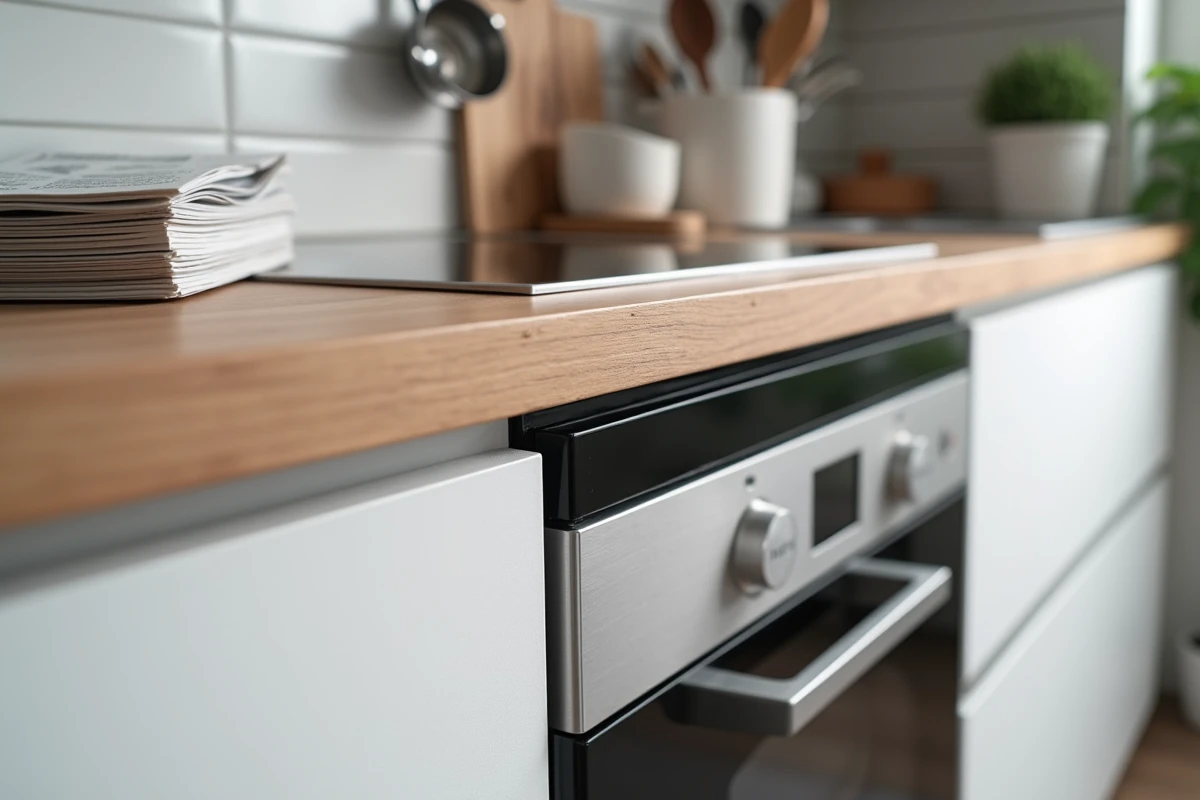
A common case in apartments: the free space is located opposite the sink, with the oven in between. Running water and drainage lines under or behind a freestanding stove remains technically possible, as confirmed by installer feedback. Flexible supply lines can bypass the appliance if it is not built-in.
The difficulty arises with an oven built into a column. In this case, routing the pipes often requires crossing a cabinet or taking a detour through the wall, with additional connections that multiply potential leak points. Field feedback varies on this point: some installers consider the configuration viable with quality connections, while others systematically advise against it beyond a certain pipe length.
Separator Panel and Ventilation: The Solution for an Adjacent Installation
When the kitchen configuration leaves no choice and the dishwasher must be next to the oven, manufacturers offer a documented solution: the separation panel. This is not just an aesthetic cover.
This panel, usually made of melamine wood or insulating material, creates an air gap between the two appliances. This air gap acts as a thermal buffer. Some manufacturers recommend that this panel be ventilated, meaning that air can circulate from the bottom and escape from the top of the cabinet.
- A solid panel without ventilation reduces direct thermal transfer but can create a stagnant heat zone between the two appliances
- A panel with ventilation openings at the bottom and top allows for natural convection that dissipates residual heat
- The thickness of the panel varies according to the recommendations of the oven manufacturer, and the installation manuals reference this subject, not the generic advice found online
Before finalizing a kitchen plan with the oven and dishwasher side by side, consulting the installation manual of both appliances remains the most reliable approach. Recommendations vary from model to model, and the suggested distances or separation thicknesses are not universal.
A kitchen designer or installer who does not consult these documents before installing the appliances overlooks data that manufacturers deem important enough to put in writing since 2023.