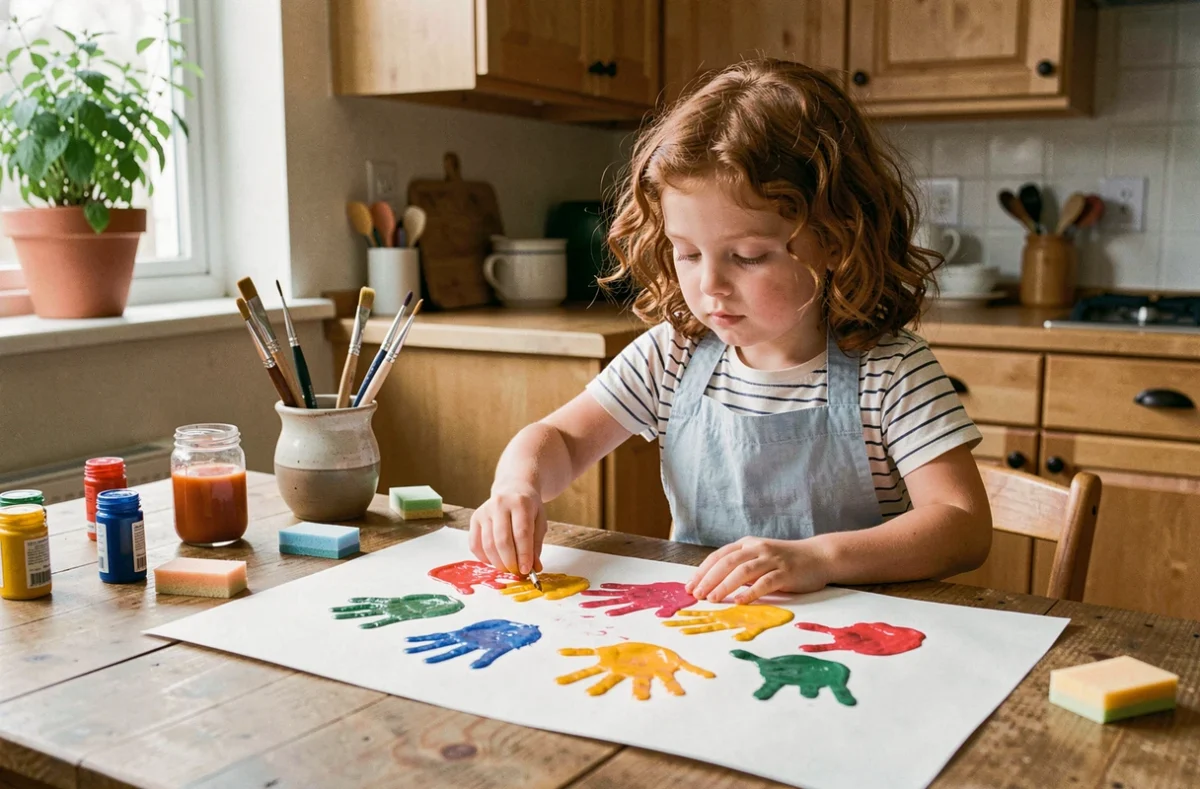
A playful and educational activity is not defined by the materials used, but by the quality of the interaction it generates. Play, whether free or guided, remains the main lever for cognitive, motor, and language development in children. Offering playful and educational ideas to keep children occupied on a daily basis means identifying activity formats that truly engage their attention, their bodies, and their problem-solving abilities.
Recent regulatory framework on screens and consequences for activity choices
Since an order dated June 27, 2025, published in the Official Journal on July 2, the national charter for the reception of young children prohibits any exposure to screens for children under 3 years old in collective care structures and with childminders. This prohibition also covers television left on as background noise.
This guideline is now included in the health booklet provided at birth since January 2025. Health professionals are required to inform parents during consultations.
For families, this regulatory tightening has a direct consequence: the time previously spent on screens must be replaced by something else. Catalogs like the Poupala site for children help identify suitable materials for each age group, but the choice of activity matters more than the object itself.
An expert report submitted to the presidency in April 2024, titled Children and Screens: In Search of Lost Time, emphasizes a specific point: protect the time for free play, movement, and conversation before seeking to fill the day with structured activities.
Free play vs. guided activity: two complementary logics for development
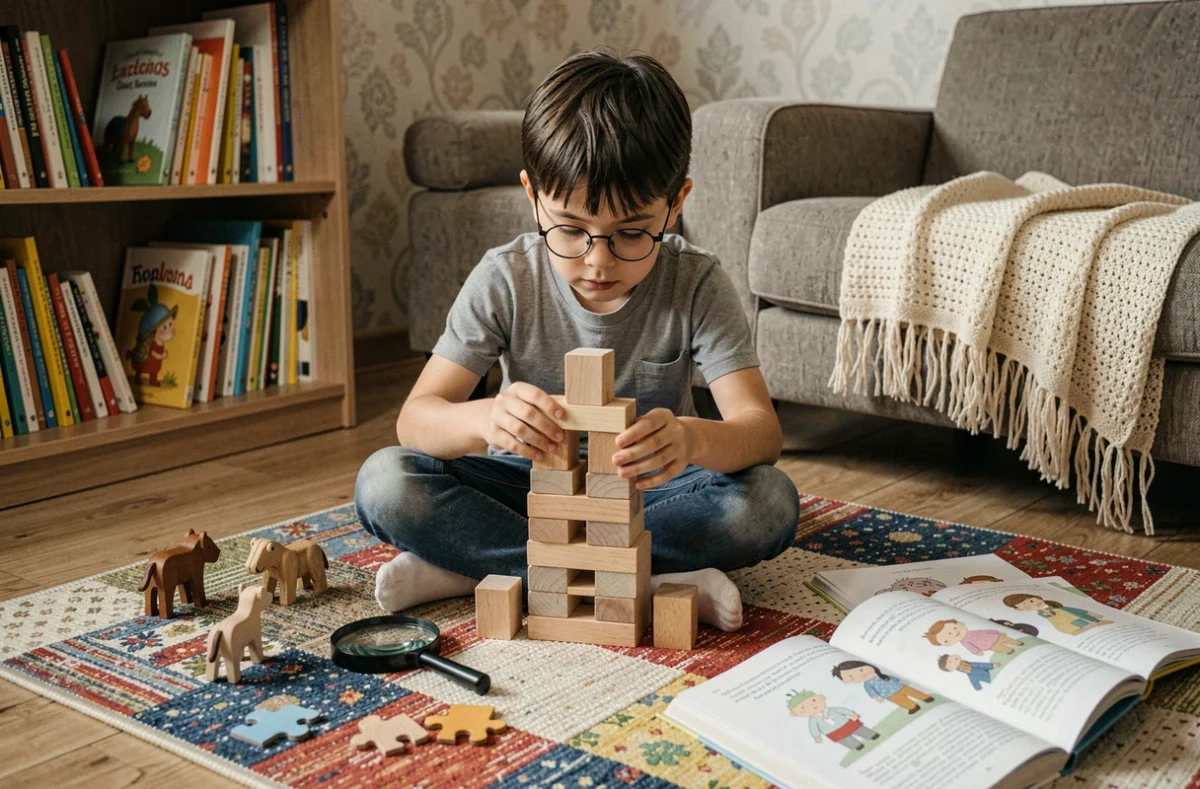
Free play refers to any situation where the child independently chooses what to do, with what, and for how long. A child stacking cushions, sorting bottle caps by color, or inventing a dialogue between two figurines is engaging in free play. No external instructions guide their actions.
Guided activity, on the other hand, involves a rule, a goal, or a framework set by an adult. Following a cooking recipe, replicating a model with modeling clay, or playing a board game with fixed rules falls under guided activity.
Why alternate between the two formats
Free play develops imagination and self-regulation, as the child must decide, adjust, and solve problems independently. Guided activity, in contrast, structures concentration, adherence to instructions, and coordination with others.
A child who only engages in free play may lack sequential markers (following steps). A child who only participates in guided activities risks losing initiative. Daily alternation between these two formats creates a balance that neither can guarantee alone.
Hands-on activities at home: three formats that engage different skills
Rather than listing dozens of ideas, let’s focus on three categories of hands-on activities that mobilize distinct areas of development.
- Free construction (blocks, kapla, cardboard, legos): engages spatial representation, planning, and fine motor skills. The child must anticipate the balance of their structure before placing each piece. Usable from 2-3 years with large blocks, then made more complex with smaller pieces.
- Modeling (modeling clay, salt dough, clay): works on finger pressure, symmetry, and patience. Unlike drawing, modeling provides immediate tactile feedback, which helps children who struggle to stay focused on a visual task.
- Cutting and assembling (gluing, simplified origami, cardboard models): requires precise hand-eye coordination and sequential reading of steps. This format directly prepares writing gestures in preschool-aged children.
Expensive materials are not a prerequisite. Toilet paper rolls, packaging cardboard, and glue are sufficient for most of these activities.
Shared reading and vocabulary: an underestimated lever in daily life
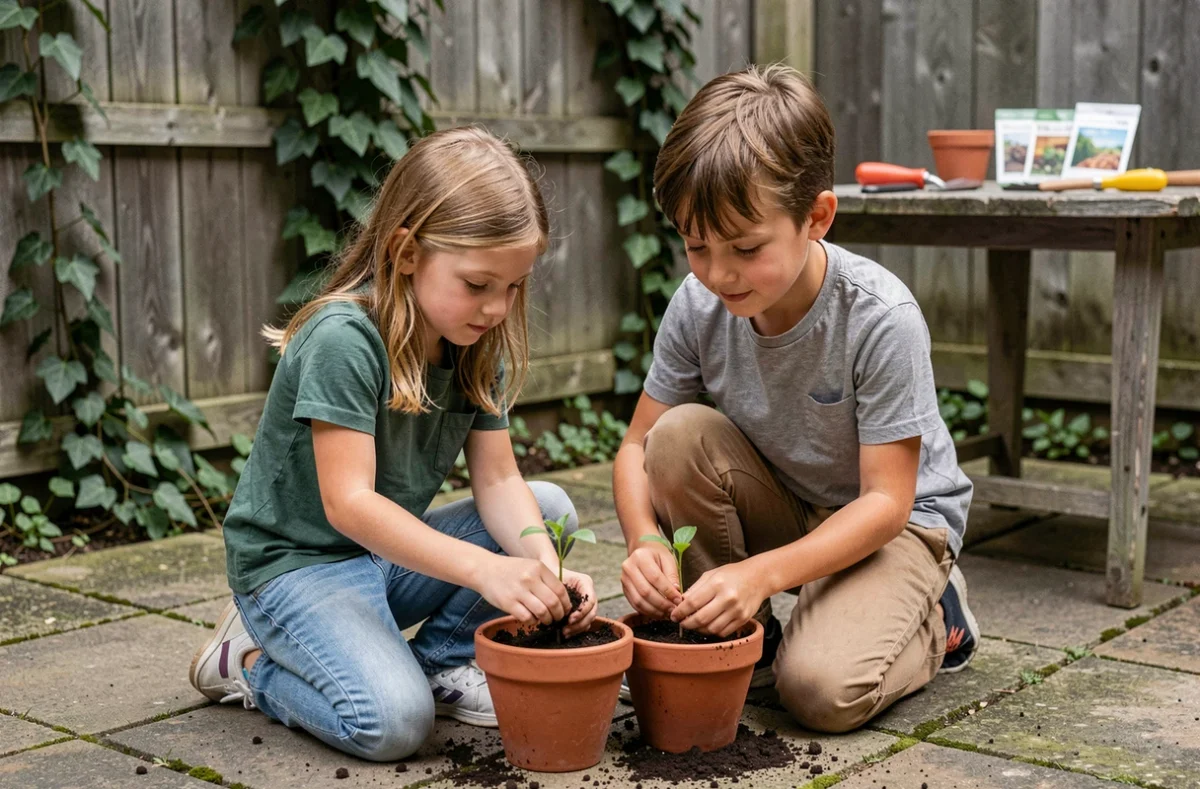
Shared reading is not limited to reading a story before bed. Reading aloud while asking open-ended questions (what will happen next? why is the character doing that?) transforms a passive moment into an active exercise in reasoning and vocabulary enrichment.
For children under 3 years old, pointing to pictures and naming objects aloud already constitutes a form of language learning. After age 4, asking the child to recount the story in their own words after reading engages working memory and narrative structuring.
Adjusting difficulty without discouragement
An overly simple book is boring. An overly complex book is frustrating. The practical guideline: the child should understand the majority of the text but encounter a few new words with each reading. These unknown words, placed in a narrative context, anchor better than vocabulary learned through isolated repetition.
Movement and exploration: the outdoors as a space for educational activities
The expert report from 2024 mentioned above reminds us that movement time must be protected every day, just like sleep. A child who moves regularly sleeps better, concentrates longer, and regulates their emotions more effectively.
Outdoor activities do not need to be organized to be educational. Collecting leaves and sorting them by shape or size constitutes a categorization exercise. Observing insects in a garden or park engages sustained attention. Running, climbing, and jumping on an improvised course develops proprioception.
- Motor courses in a garden or park with natural obstacles (logs, flat stones, gentle slopes)
- Collecting natural elements for a sorting or gluing workshop at home
- Outdoor water games with containers of different sizes, introducing the concept of volume
The most effective activity for awakening a child daily is often the simplest: an available adult, a safe space, and the freedom to explore without performance objectives. The French regulatory framework now pushes in this direction, reminding us that play, movement, and direct conversation are not alternatives to screens, but the foundations of child development.